Lipo Sculpt · Non-surgical aesthetics

How Did HIFU Start? The History and Development of Focused Ultrasound

Understanding How High-Intensity Focused Ultrasound Developed From Medical Technology Into Cosmetic Treatments
High-Intensity Focused Ultrasound, commonly known as HIFU, uses concentrated ultrasound energy to affect tissue at specific depths.
Although HIFU is now discussed in connection with non-surgical cosmetic procedures, its development began in medical research rather than the beauty industry.
Over several decades, researchers explored how focused ultrasound could deliver energy to specific areas of the body without surgical incisions.
Today, different forms of focused ultrasound are used or investigated for a range of medical and aesthetic applications. However, the equipment, treatment settings, evidence and intended outcomes vary considerably.
Understanding this history can help explain how modern cosmetic HIFU developed and why individual assessment remains important.
HIFU Treatment Edgware

Start with a conversation.

Understand your options before deciding on treatment.

Consultation first

Time to discuss suitability and ask questions.

A plan around you

Treatment options explained for your circumstances.

Convenient home visits

Subject to treatment and local availability.

What Is HIFU Edgware?

HIFU stands for High-Intensity Focused Ultrasound.
The technology uses ultrasound waves concentrated at a selected focal point, where the energy can produce controlled heating within targeted tissue.
In medical applications, this process can create a therapeutic effect in a specific area.
In cosmetic applications, certain focused ultrasound devices deliver energy to selected layers beneath the skin.
The resulting thermal response may stimulate tissue remodelling, including processes associated with collagen production.
However, the effects depend on the device, energy settings, treatment depth, area being treated and individual circumstances.
Not all focused ultrasound devices are designed for the same purposes.

The Early History of Focused Ultrasound

Early Research in the 20th Century

Research into the biological effects of focused ultrasound developed during the first half of the twentieth century.
Scientists investigated how sound waves could be concentrated to produce effects within tissue without directly cutting through the surface.
During the 1940s and 1950s, researchers explored focused ultrasound for experimental medical applications, including neurological research.
These early investigations helped establish principles that later influenced therapeutic ultrasound technology.
Hifu 1 1

Development of Medical HIFU Edgware

As ultrasound imaging and treatment technology progressed, researchers began investigating focused ultrasound for more targeted medical applications.
Medical HIFU has subsequently been studied and used in selected circumstances, including treatment of certain prostate conditions and uterine fibroids.
These medical applications are distinct from cosmetic ultrasound procedures.
They involve different equipment, clinical protocols, patient selection and regulatory requirements.
The existence of medical HIFU technology does not establish that every cosmetic HIFU device has the same effectiveness or safety profile.

Your treatment journey

When Did HIFU Become Used in Cosmetic Treatments?
Interest in focused ultrasound for cosmetic applications increased during the 2000s.
Researchers and manufacturers explored whether ultrasound energy could produce controlled heating beneath the skin and encourage tissue changes associated with collagen remodelling.
Certain microfocused ultrasound systems subsequently received regulatory clearance in the United States for specific cosmetic indications.
For example, particular devices have received US Food and Drug Administration clearance for selected lifting or wrinkle-related applications.
Importantly, regulatory clearance applies only to the specific device and indication. It does not mean that every HIFU machine or cosmetic application has FDA clearance or UK regulatory authorisation.
Aesthetic ultrasound technology continues to develop, with different devices and treatment approaches becoming available.
How Does Cosmetic HIFU Work?
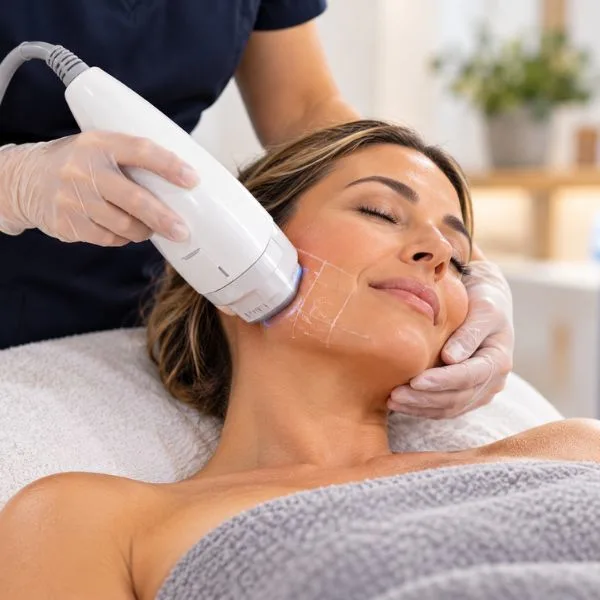
Cosmetic HIFU uses focused ultrasound energy directed towards selected depths beneath the skin.
The energy can create small areas of controlled thermal effect within targeted tissue.
This may trigger a tissue response that remodels collagen over time.
Collagen is a structural protein that contributes to the skin’s strength and support.
Changes in collagen and surrounding tissue may influence skin appearance, although the extent of any cosmetic improvement varies.
The precise treatment mechanism and expected outcomes depend on the device being used.
HIFU should not be described as producing the same results as a surgical facelift.

A considered approach

How Has HIFU Technology Changed Over Time?
Focused ultrasound has improved through advances in equipment design, energy delivery, and the ability to target different tissue depths.
Some modern systems incorporate imaging or other features intended to support treatment planning.
However, not every device includes these capabilities.
Different cosmetic HIFU machines may vary in:
  • Ultrasound frequency and energy output
  • Treatment depth
  • Handpiece and cartridge design
  • Available treatment settings
  • Intended treatment areas
  • Supporting clinical evidence
  • Regulatory status
Because of these differences, findings from studies involving one device cannot automatically be applied to another.
What Is HIFU Used for in Cosmetic Treatments?
Certain focused ultrasound systems are used in cosmetic practice for procedures intended to address aspects of skin laxity or appearance.
Depending on the specific device and its supported indications, areas that may be discussed include:
  • Face and jawline
  • Neck
  • Brow area
  • Upper chest or décolletage
  • Selected body areas
Treatment suitability and evidence vary between devices and anatomical areas.
Listing an area does not mean that every HIFU system is suitable or authorised for use there.
A practitioner should explain the intended use and limitations of the particular equipment being considered.
Is HIFU the Same as a Surgical Facelift?
No. HIFU and surgical facelifts are different procedures.
A surgical facelift involves surgery to reposition or remove tissue, whereas cosmetic HIFU uses focused ultrasound energy without incisions.
The procedures work differently and have different potential outcomes, risks, and recovery considerations.
Cosmetic HIFU cannot be assumed to achieve the same degree of tissue repositioning as surgery.
Individuals considering treatment should receive realistic information about what a particular procedure may and may not accomplish.
Is Cosmetic HIFU Safe?
Cosmetic HIFU is a non-surgical procedure, but that does not mean it is risk-free.
Possible effects and complications can include:
  • Pain or discomfort during treatment
  • Redness or swelling
  • Tenderness
  • Bruising
  • Temporary altered sensation
  • Burns or blistering
  • Changes in pigmentation
  • Unintended tissue or fat changes
  • Nerve irritation or injury
Some complications may be persistent or require medical assessment.
The likelihood and severity of complications depend on the device, settings, treatment area, practitioner technique and individual factors.
Before treatment, you should receive information about the specific risks and limitations associated with the proposed procedure.
Who May Not Be Suitable for Cosmetic HIFU?
HIFU is not appropriate for everyone.
Factors that may require additional consideration include:
  • Pregnancy or breastfeeding
  • Active infection or inflammation in the treatment area
  • Open wounds or certain skin conditions
  • Relevant medical implants or electronic devices
  • Previous cosmetic procedures
  • Certain medical conditions or medications
  • Significant skin laxity that may not respond as expected
  • Unrealistic expectations about treatment outcomes
The exact exclusions depend on the device and treatment protocol.
A suitability assessment should take place before considering any procedure.
What Results Can Someone Expect From Cosmetic HIFU?
The response to cosmetic HIFU varies.
Where a particular treatment is effective, visible changes may develop gradually as tissue remodelling occurs.
Some individuals may notice changes in skin appearance, while others may experience little or no visible improvement.
The extent and duration of any result depend on several factors, including the device, treatment area, skin characteristics and individual response.
In some circumstances, we may recommend additional sessions, but further treatment does not guarantee a particular outcome.
No cosmetic HIFU procedure can guarantee a specific degree of lifting, tightening or wrinkle reduction.
Why Is a Consultation Important?
A consultation allows you to discuss your concerns, understand the available options, and decide whether further assessment is appropriate.
Before deciding whether to proceed, you can ask about:
  • The specific HIFU device proposed
  • Its intended uses and supporting evidence
  • The practitioner’s relevant training and experience
  • Possible side effects and complications
  • Expected outcomes and limitations
  • Aftercare and follow-up arrangements
  • Whether an alternative treatment or medical assessment may be more appropriate
At Lipo Sculpt, we encourage an informed, consultation-led approach to non-surgical cosmetic treatments.
Selected mobile services may be available in participating UK locations, depending on the procedure, individual suitability and treatment arrangements.

Your questions, answered

Frequently Asked Questions About the History of HIFU

These answers offer a starting point. Your consultation provides information specific to the treatment and your circumstances.

Researchers investigated the principles of focused ultrasound in the first half of the twentieth century. Researchers further studied its biological and therapeutic effects during the 1940s and 1950s.
No. Medical and scientific research developed focused ultrasound technology before it was later adopted for selected cosmetic applications.
Interest in cosmetic focused ultrasound grew in the 2000s, with certain aesthetic devices receiving regulatory clearance for specific indications in later years.
No. US regulatory clearance applies to specific devices and intended uses. It does not automatically extend to other machines or treatment areas.
A permanent result cannot be guaranteed. Where improvements occur, their duration varies depending on the device, treatment, and individual circumstances.
No. Suitability depends on medical history, the treatment area, the device and other individual factors. Some people may be advised against treatment.
No. Some people experience discomfort during treatment, and temporary tenderness or other reactions may occur afterwards.
HIFU is not equivalent to a surgical facelift. The procedures work differently and can produce different outcomes, so HIFU should not be presented as providing the same degree of lifting or tissue repositioning.

Let's talk about your options

Understanding Your Non-Surgical Treatment Options
Focused ultrasound technology has developed considerably since its early medical research applications.
Today, cosmetic HIFU is one of several non-surgical approaches you may consider when exploring options for skin appearance.
However, not every device or treatment approach has the same supporting evidence, and results cannot be guaranteed.
At Lipo Sculpt, an initial conversation can help you understand the available options, ask questions and decide whether further assessment is appropriate.
There is no obligation to proceed following an enquiry.
This article provides general information and does not replace medical diagnosis, assessment or treatment.